Safety Foundations
Reachability, control, planning, verification, and learning
Lifecycle safety requires rigorous tools for reasoning about risk, recoverability, uncertainty, and intervention. In this theme, we develop theoretical and computational foundations for safety-critical autonomy, including reachability analysis, Hamilton-Jacobi methods, control-theoretic safety, planning, verification, and learning-based safety representations.
Representative Projects
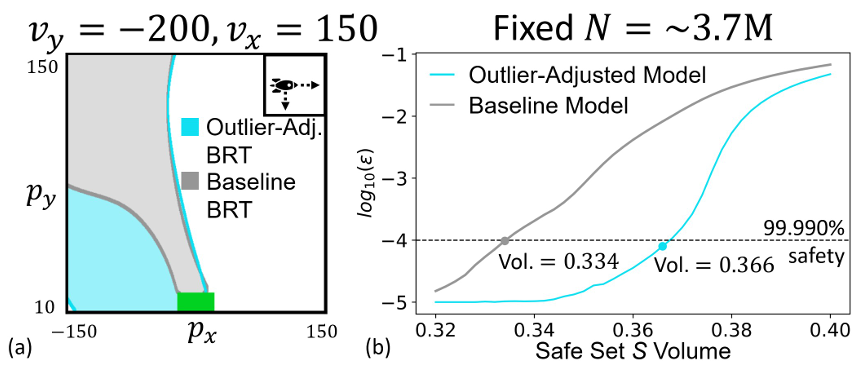
Verification of Neural Reachable Tubes
Scenario optimization and conformal prediction turn learned reachable tubes into formal safety assurances, providing finite-sample guarantees for neural reachability methods.
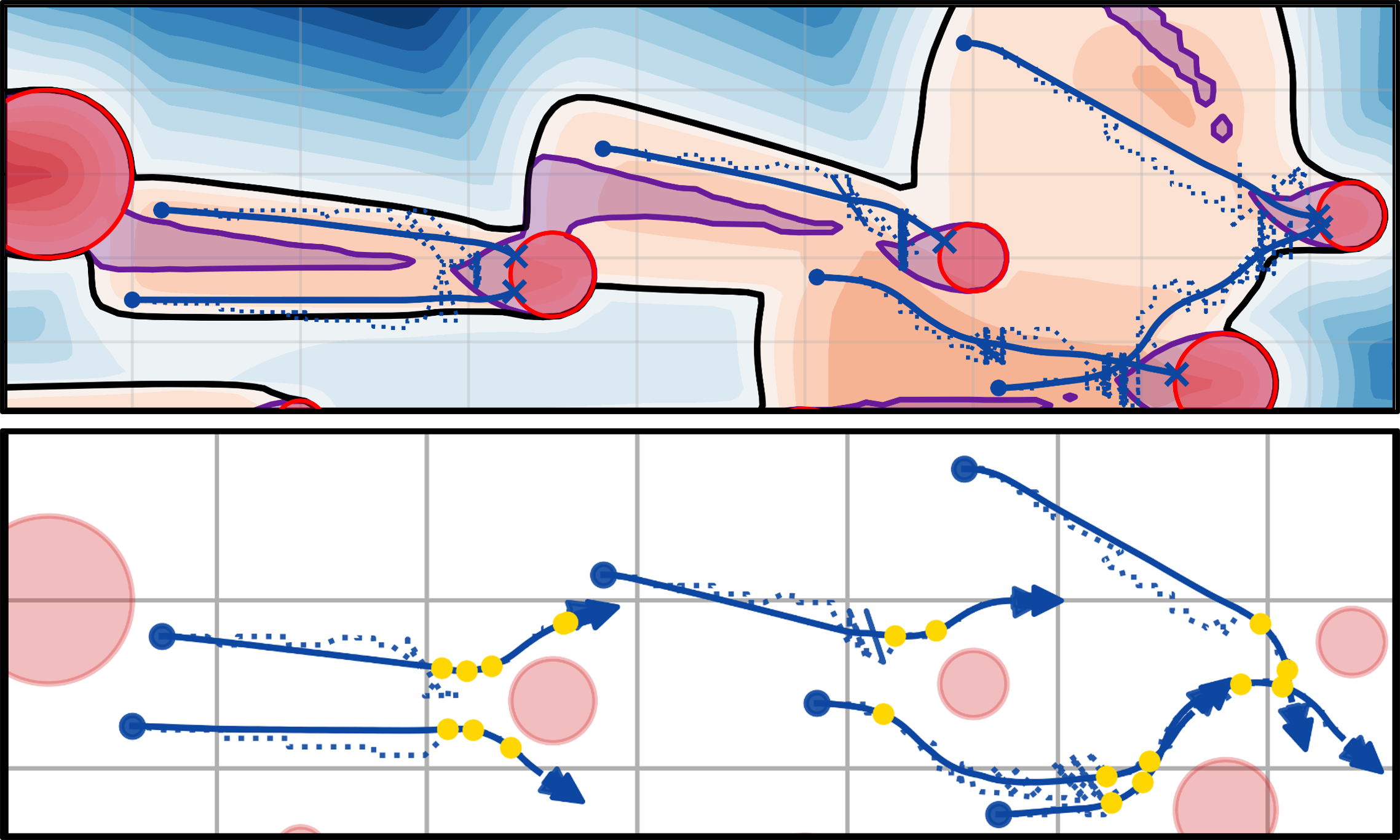
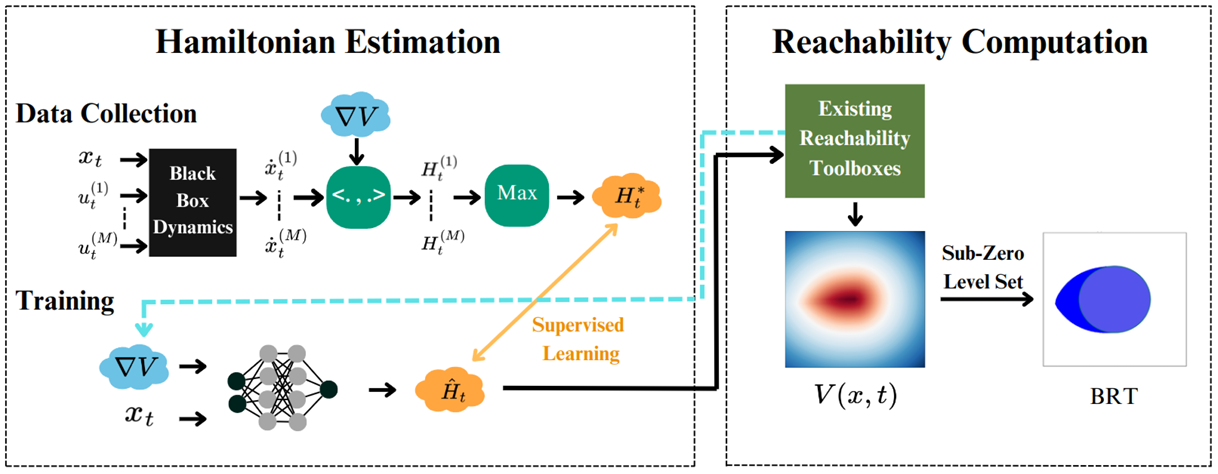
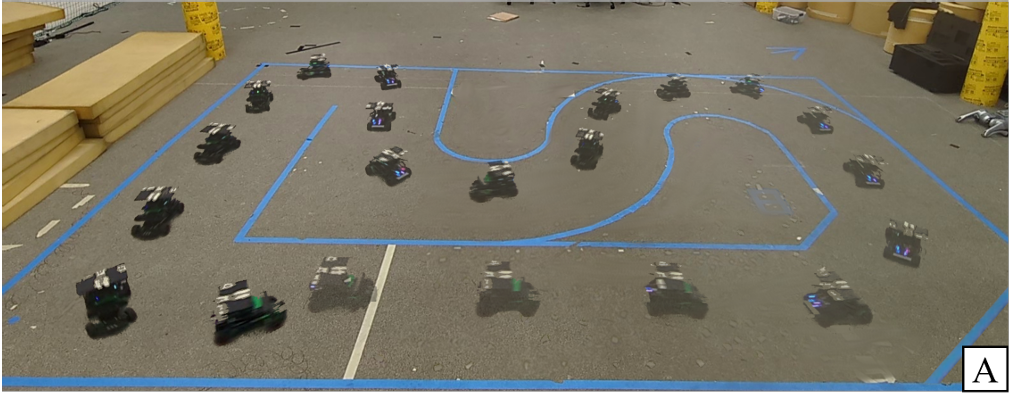
DualGuard MPPI
DualGuard MPPI combines sampling-based model predictive control with Hamilton-Jacobi reachability so a performant controller can be guarded by principled safety reasoning.
Physics-Informed Learning for Co-Optimizing Safety and Performance
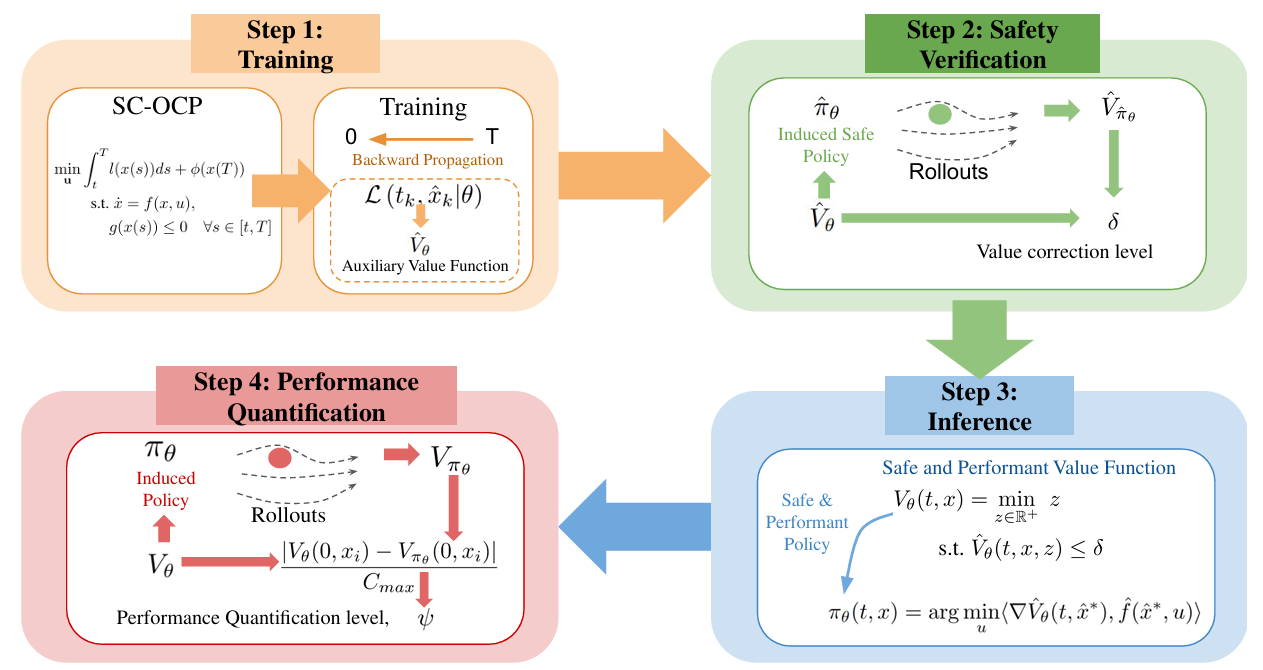
Physics-informed learning embeds dynamics and control constraints into neural optimization, helping autonomous systems co-optimize task performance and safety for nonlinear control problems.
Safe Spacecraft Docking
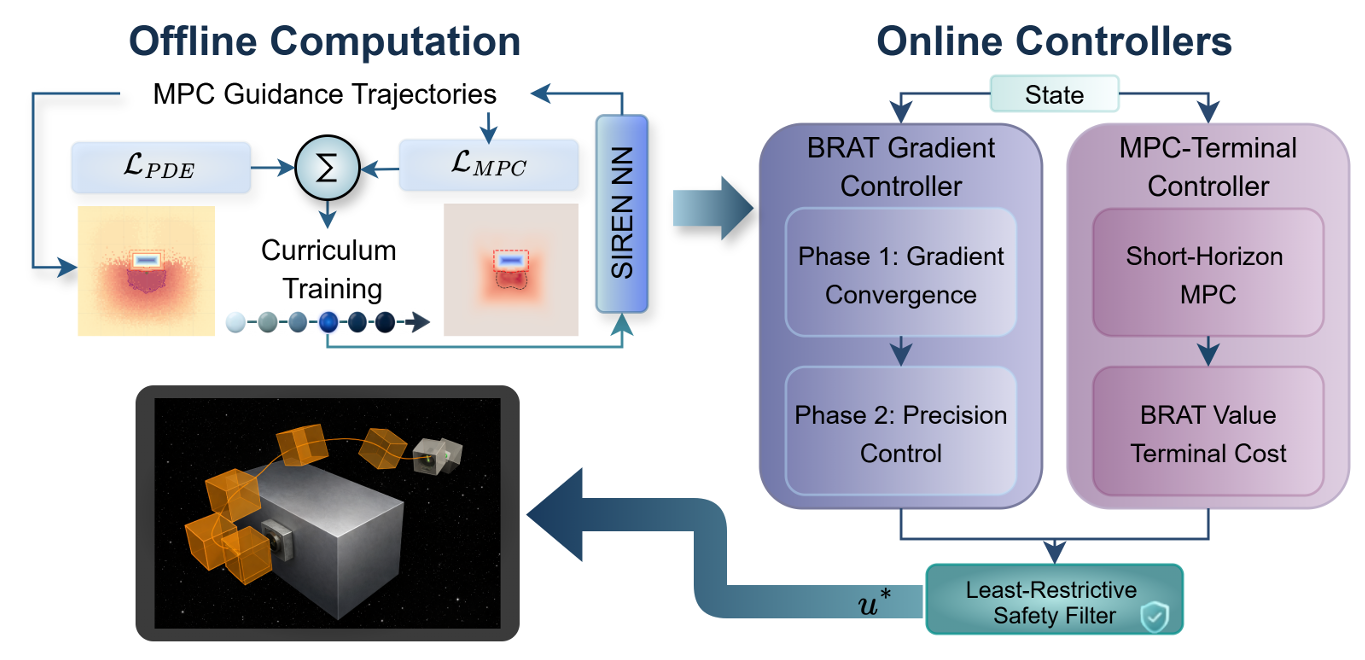
Neural backward reach-avoid tubes with MPC supervision scale reachability-style safety analysis to high-dimensional spacecraft docking, learning safety certificates and recovery guidance for safe approach.